
Online ordering & POS
Takeout built Asian restaurants in America. The question isn't whether to sell online. It's how much of each order you keep.
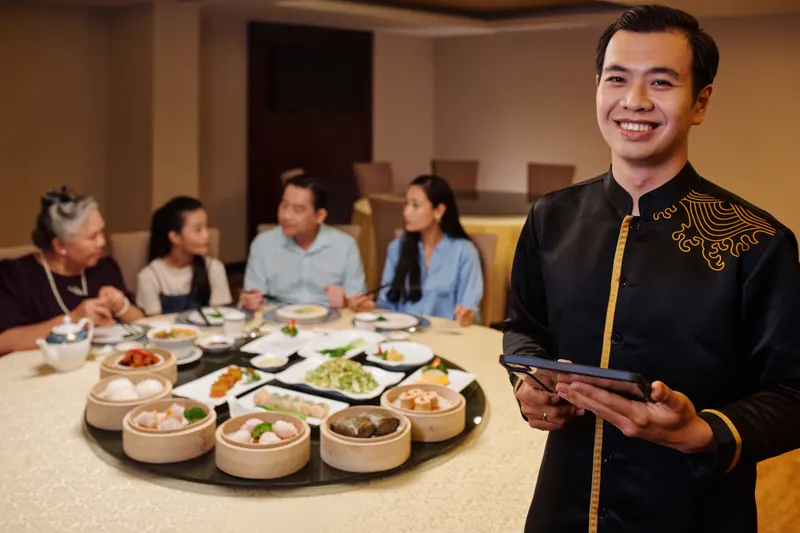
Quick answer
Set up direct ordering on your own site first. Platforms like Lumit make that a same-week job. Then add marketplaces like DoorDash for discovery. Direct orders keep the 15% to 30% commission in your pocket and the customer relationship in your hands.
Direct first, marketplaces second
Run the math once and the strategy writes itself. A $1,000 marketplace weekend hands over $150 to $300 before food cost. The same weekend through your own ordering page costs about $30 in card fees. Marketplaces still matter. They find you new customers. But they are the top of the funnel, not the business.
- Your own page is the profitable core: regulars, repeat orders, pickup
- Marketplaces are paid discovery: new movers, tourists, late-night impulse
- The game: convert every marketplace customer into a direct one, one bag insert at a time
What to look for in a direct-ordering platform
Ignore the feature lists. For an Asian menu, five things decide whether the platform helps or hurts:
- A branded page that looks like your restaurant, not a listing in someone else's app
- Modifiers that survive real orders: spice levels, 'no cilantro', protein swaps, noodle choices
- Menu photos everywhere a dish appears, because they sell
- Your customer list, exportable. If you can't take it with you, it isn't yours.
- Simple hardware: a tablet and a printer should be enough to start
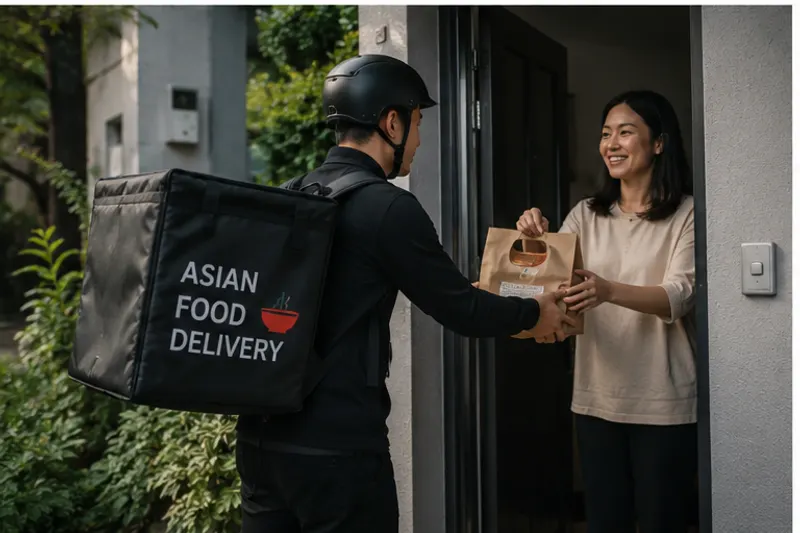
Give marketplaces one job and nothing more
Treat marketplace commissions as an advertising budget, because that is what they are. List a slightly trimmed menu, price 10% to 20% above dine-in to cover the fee, and let them introduce you to strangers. Then bring the strangers home.
- Trim the menu to dishes that travel well. A soggy signature dish is a public one-star
- 'Order direct next time' card in every bag, with a small first-order treat
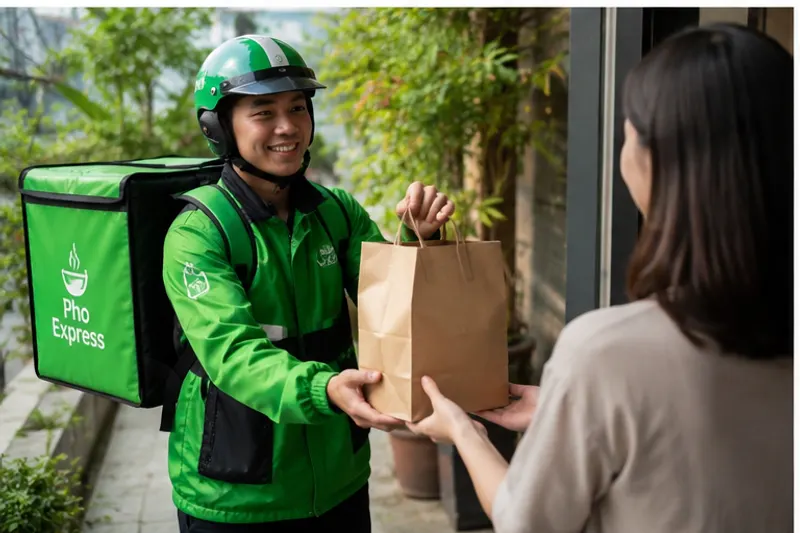
Direct ordering & POS platforms
Four solid ways to own your orders. Different sizes of commitment:
Lumit
Our pickBuilt for independent restaurants: your own branded ordering page, painless menu and photo management, and the customer relationship stays yours. The smoothest start we've seen for a small team.
- Fast to launch, no heavy hardware
- Your brand and your customer data, not a marketplace's
- Priced for independents
- Newer name than the US giants
- If you want a full legacy POS empire in one box, look at Toast
Toast
Full POSThe heavyweight: POS, kitchen screens, online ordering, payroll add-ons. One system for everything, if you're ready to commit to it.
- Deep restaurant feature set
- Strong kitchen display and reporting
- Hardware costs and contracts add up
- Overkill for a small takeout counter
Square for Restaurants
Simple startFamiliar hardware, a real free tier, and online ordering that plugs into the register you may already own.
- Free plan to start
- Easy setup, easy staff training
- Restaurant-specific depth is thinner than dedicated platforms
- Processing fees on everything
ChowNow
Flat feeCommission-free ordering with a marketing angle. They push your restaurant in their app and locally.
- No per-order commission
- Brings some discovery of its own
- Monthly membership regardless of volume
- Less control over the ordering experience than a fully own-branded page
Marketplaces (use deliberately)
Rented reach. Worth it when you know what it's for:
DoorDash
Biggest reachThe largest US delivery marketplace. If you list on only one, it's this one.
- Huge customer base in most metros
- Strong suburban coverage
- 15% to 30% commission by tier
- The customer belongs to the app, not to you
Uber Eats
Cities & touristsStrong in dense cities and with travelers who already have the app from the airport.
- Taps the Uber user base
- Good late-night demand
- Commission tiers like the rest
- Support quality varies by market
Grubhub
East coastThe veteran, still strong in northeastern cities and on college campuses through its campus program.
- Loyal user base where it's strong
- Campus partnerships bring student volume
- Coverage is uneven across the country
- Same commission math as the others
Whichever you choose: track the monthly statement, and never let a marketplace be the only place your menu lives online.
Common questions
Do I need both direct ordering and marketplaces?
For most restaurants, yes. They do different jobs. Marketplaces introduce you to strangers; your own channel keeps the relationship and the margin. Direct-only works once you're established; marketplace-only quietly caps your profit forever.
What does online ordering actually cost?
Direct platforms charge a monthly fee, a small per-order fee, or both, plus roughly 3% card processing. Marketplaces take 15% to 30% per order. The gap between those two numbers is why this page exists.
Can customers order in Chinese, Vietnamese or Korean?
Some platforms handle multilingual menus, some don't. If a big share of your neighborhood orders in another language, put it on your shortlist requirements and ask directly in the demo.
Orders sorted? Check your state's rules.
Wages, liquor and taxes change at every state line. See how yours compares.